
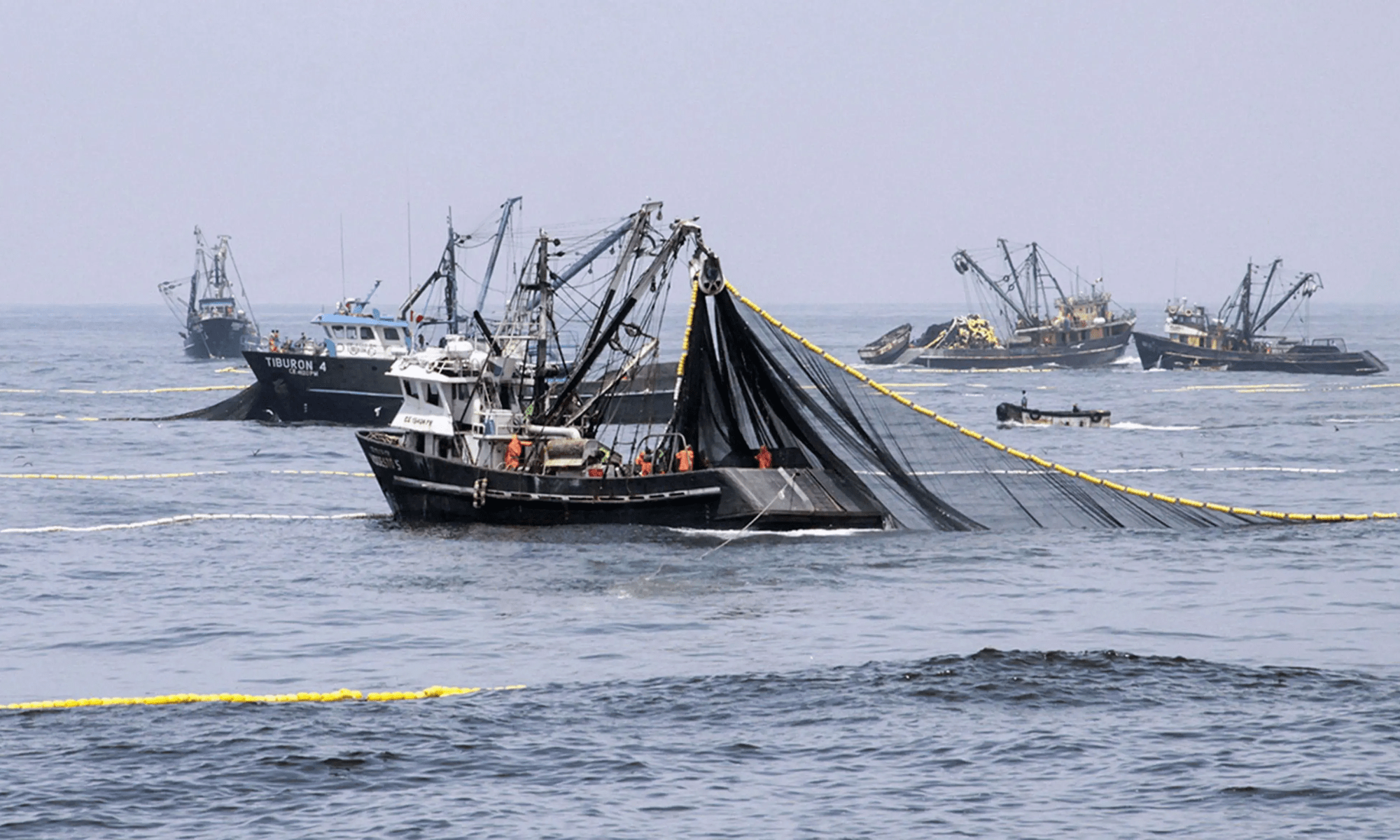

The 2024 first fishing season of anchovy (anchoveta) in Peru started on 16 April, with the quota set at 2.475m tonnes in the key north-central zone. This area comprises the world’s largest commercial fishery in volume, resulting in Peru accounting for around one-fifth of the global fishmeal supply.
2023-2024 early closures and cancellations
The South American country’s Production Ministry (PRODUCE) more than doubled its 2024 anchovy quota to pre-El Niño levels, a move welcomed by the global fishmeal industry, which is still recovering from the shock cancellation of last year’s first fishing season. The decision to cancel that season cost the fishery an estimated USD 1.4 billion (EUR 1.3 billion) in lost revenue, but allowed the fish to mature and stocks to recover.
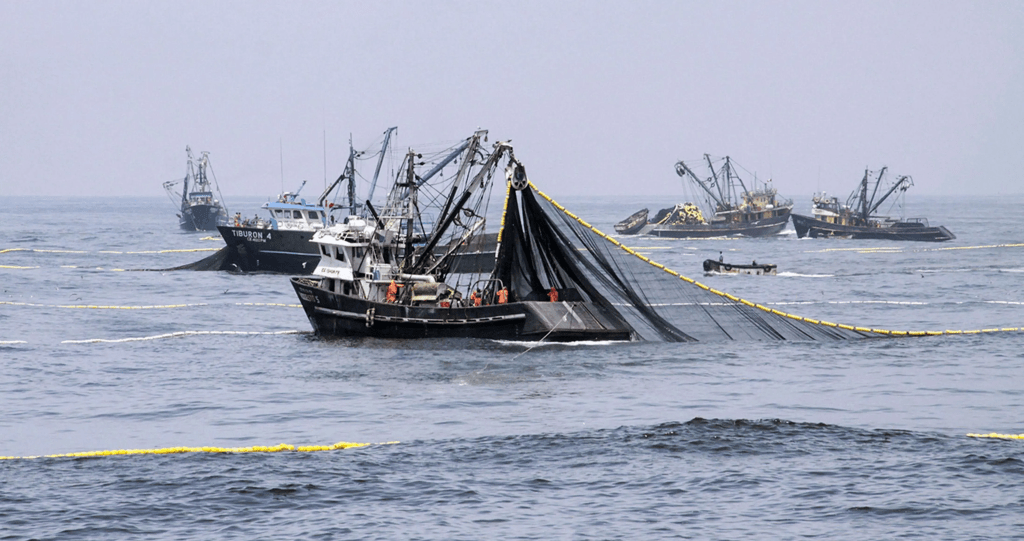
In January last year, Peru’s second anchovy season of 2022-2023 was closed early, after fishermen reported significant by-catch of anchovy juveniles. In the summer of 2023, Peruvian authorities were forced to cancel the first anchovy season of 2023-2024 altogether, following exploratory fishing expeditions found large numbers of small and juvenile fish. The bycatch of juveniles reached 86.3% in number of individuals and 77% in weight units. PRODUCE again closed the country’s second anchovy season in January 2024 early, owing to the effects of El Niño, with only about 75% of the 1.68 million tonnes permitted quota caught.
2024 catch numbers
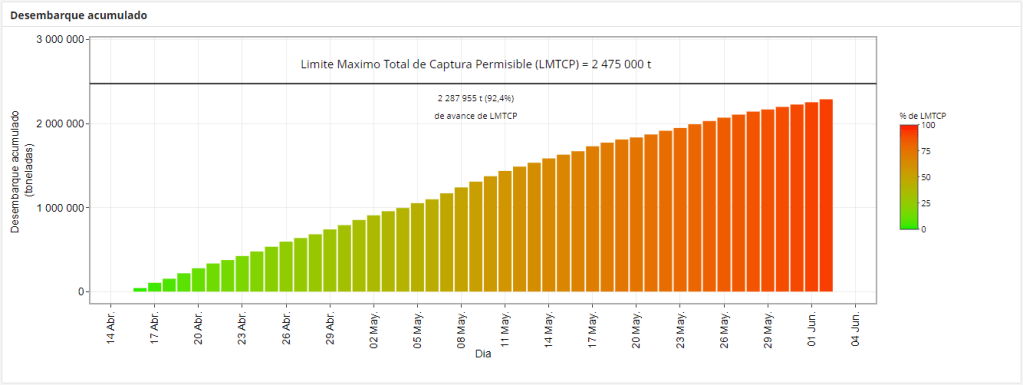
In 2024, after 1.5 months of fishing, 32.4% of the harvested fish in number and 22.5% in weight are juveniles. The total catch has reached 2.28m tonnes (92% of the total quota), already a higher volume than the full year of 2023. The favorable conditions suggest the entire quota will be caught, with a decreasing share of juveniles seen throughout the season.
The increased availability of raw materials benefits sea farming industries, particularly salmon producers, who rely on pelagic fish as a key ingredient in their fish feed value chains.
Vessel Types and landing ports
Although steel vessels have been growing their market share for decades, wooden industrial boats still retain a remarkable 20.5% of the catch in volume (470,000 tonnes). Steel vessels also have a storage capacity that is four times larger, on average, than their wooden counterparts.
The biggest landing port remains Chimbote, followed by Chicama and Callao.
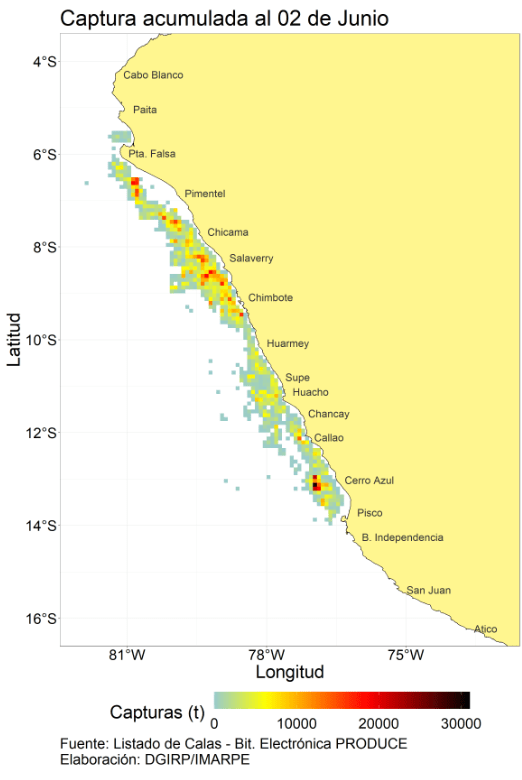
The daily updates can be followed at Peru’s Marine Institute (IMARPE) website here.
 Maritime South